Please follow & like us

Sefton Council to provide free school meals during half-term

To meet the needs of local children and their families during half-term, Sefton Council will be providing free school meals. You can apply using the e-form provided on the dedicated October half-term free school meals webpage 

Cllr Trish Hardy, Cabinet Member – Communities and Housing said:

“Sefton Council are putting in place a scheme to support children and their families accessing free school meals in the borough during this half term. We will be sharing more information on how to access the scheme as soon as possible.

 â€œWe will also continue to provide additional funding and support to our local voluntary sector partners, including the local food banks who are well stocked to enable them to help some of Sefton’s hardest hit families during these difficult times.

 â€œOur family wellbeing centres in Talbot Street (Southport), Marie Clarke (Bootle) and Netherton also remain open to families who need their support during half-term. We have also increased the funding available to our Emergency Limited Assistance Scheme, and would encourage anyone in Sefton who may need extra support at this time to contact the council on 0345 140 0845.”

A message from the Sefton Director of Public Health to parents and carers during half-term 

Dear parents and carers,

On 12 October 2020 a national system of local COVID alert levels was introduced.
Central government imposed ‘Very High’ (Tier 3) alert level regulations for Sefton and the rest of Liverpool City Region on 14 October 2020.

With schools and educational settings due to break for half term, we wanted to provide some information about what these measures mean so that you can consider these circumstances when planning half term activities. It is now more important than ever that people follow these latest measures.

Health care leaders from across Merseyside are also encouraging all residents to play their part by:

1. washing your hands
2. avoiding crowds
3. keeping your distance
4. not meeting other households in houses or indoor venues, e.g. restaurants
5. using face coverings – these should cover the nose and mouth
6. staying at home and getting tested if you have symptoms no matter how mild – the main symptoms are a high temperature, a new continuous cough or a loss or change to your sense of smell or taste. Tests should be booked at www.gov.uk/get-coronavirus-test or by calling 119.
7. following self-isolation advice if you are the contact of a positive case or a household member of a symptomatic individual Frequently Asked Questions (FAQs)

What do the measures mean?

The measures state that it is now against the law to meet socially with friends and family indoors in any setting unless they are part of your household or support bubble.

This includes private homes and indoors in hospitality venues, such as restaurants. You must not have children from other households or families to stay in your home, for example for dinner or a sleepover. You must also not meet with people outside of your household or support bubble in a private garden or in most outdoor public venues.

You may continue to see friends and family you do not live with (or have formed a support bubble with) in groups of 6 or less, including children of any age, in certain outdoor public spaces. These outdoor public spaces include parks, beaches, outdoor sports facilities and public gardens. Please remember HANDS, FACE, SPACE when out.

Informal childcare can also be provided via childcare bubbles. Children can also spend time with another parents as part of a joint custody arrangement.

Further information about measures can be found at www.sefton.gov.uk/covid19


Can children and young people take part in Halloween activities?

October half term is usually a time for family activities and to enjoy the Autumn period.

Sadly, this year, in Sefton and other parts of Merseyside we are asking people not to take part in traditional trick or treating. ‘Trick or Treating’ can increase infection risk by increasing social mixing between different households. Furthermore, Halloween parties with children and adults from different household are not permitted. We know that it is a difficult time for children and young people, especially as they will not be able to take part in some usual Halloween night activities. Further guidance, and advice on suggested alternatives, will be available over the coming days.

What are the rules around childcare?

Registered childcare providers, including nannies, people in your support bubble and people in your childcare bubble can provide childcare support in private homes and gardens.

A childcare bubble is where someone in one household provides informal (unpaid and unregistered) childcare to a child aged 13 or under in another household. This must always be between the same 2 households. Friends or family who do not live with you and are not part of a support or childcare bubble must not visit your home to help with childcare.

Childcare bubbles are to be used to provide childcare only, and not for the purposes of different households mixing where they are otherwise not allowed to do so.


I was previously shielding/was identified as extremely clinically vulnerable, what do the measures mean for me?

The Liverpool City Region, including Sefton, have had local restrictions imposed but Shielding has NOT been reintroduced across the region.

It is however advised that clinically extremely vulnerable people do take special care for example by avoiding busy areas to minimise the chance of coming into close contact with others, staying at home as much as possible and where possible working from home. Where there is no alternative, people can still go to work but their employer is required to take steps to ensure your workplace is COVID-secure.

If you have any concerns or queries regarding medical needs, please check with your GP or Consultant.


My child or the child I care for was previously identified as extremely clinically vulnerable, what does this mean for them?

All pupils and students should continue to attend education settings within Sefton under the new regulations, unless they are one of the very small number of pupils or students under pediatric or other specialist care and have been advised by their GP or clinician not to attend an education setting.

Is there any support for my child’s health and wellbeing?

It is important that we take care of the health and wellbeing of children and young people across Sefton during these challenging times. That means that we as parents  and carers must look after our own mental health. If you would like some advice or information on help available visit www.sefton.gov.uk/miscellaneous-pages/health-andwellbeing-for-children-and-young-people-during-covid19.aspx

Finally, I would like to address a worrying rise in the spread of misinformation about COVID-19. Suggestions that the pandemic is a hoax, or caused by 5G, and the refusal of some to wear a mask or comply with the new guidance serves only to cause confusion and puts lives at risk.

COVID-19 and its effects on people’s lives and livelihoods is very real. While I completely understand the frustration that many people feel at further restrictions, I plead with every resident in Sefton to protect one another by following them.

If you have any questions about the virus, or the restrictions please do visit our website where you will lots of information and advice at www.sefton.gov.uk/covid19

Many thanks for your support in helping us through these difficult circumstances.

Yours Sincerely
MARGARET JONES
Director of Public Health
Sefton Council

Borough’s teachers, schools staff, parents and carers and pupils praised

Cllr John Joseph Kelly Sefton Council’s Cabinet Member for Children, Schools and Safeguarding has praised the Borough’s teachers, schools staff, parents and carers and pupils themselves for the all that they are doing to ensure children can safely attend school.

Cllr Kelly said: “As with the rest of the region, it is a rapidly changing picture with as many as one third of schools in Sefton having been affected in some way.

“We have had class and year bubbles and the staff who work with them sent home while others are returning following periods of self-isolation.

Rumours

He continued: “Schools have done a great job informing parents and reassuring them that every effort is being made to ensure that children can safely attend school and to quell any rumours that may be being spread.

“Schools have also been also following Department for Education and Public Health England guidelines and we are all doing everything we can to ensure that our children and young people do not miss out on their vital education.”

“I would like to say a personal ‘thank you’ to teachers, schools staff, parents and carers and to the pupils themselves for working with us during this challenging period and also to wish a speedy recovery to anyone who is unwell.”

Symptoms

Cllr Kelly went on to emphasise the importance of anyone with coronavirus symptoms of a raised temperatures, new constant cough or a loss of taste or smell, booking a test as soon as they are able.

He said: “Testing is key to helping prevent the spread of infections and with the current pressure on accessing appointments, we would remind people that they should only book a test if they have the coronavirus

“They should not be trying to book themselves a test because their child has symptoms or has been sent home from school.”

Details of the latest restrictions affecting the region and how people might be affected by them can be found on the Council’s website at www.sefton.gov.uk/coronavirus along with a list of Frequently Asked Questions. These Questions cover a range of areas including people’s households and social life, their support bubbles and childcare, support for vulnerable people and education.

Easy-to-follow guide for parent & carers on COVID-19 procedures for pupils

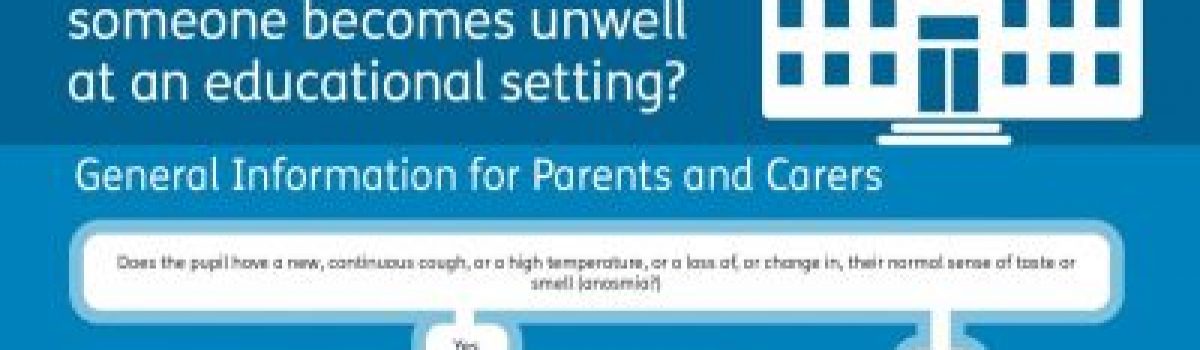
To help reassure parents and carers who are concerned about what will happen if a pupil or student becomes unwell with COVID-19 at a school or college, Sefton Council has produced a new, easy-to-follow-chart, which maps the process.

Symptoms

It explains that if a pupil is ill with the symptoms of COVID-19 – a new, continuous cough or a high temperature or a loss of, or change in, their normal sense of taste or smell – they must stay away from school or college.

Parents and cares should inform the school or college and book an appointment for a coronavirus test at www.nhs.uk/coronavirus  or by calling 119.

The child should isolate for at least 10 days from when symptoms start and other members of the household including any brother and sisters should self-isolate for 14 days from when the symptoms began.

If the child is not showing coronavirus symptoms, parents and carers should follow the normal sickness procedure for the school or college.

Positive test result

The chart explains that if the child with COVID_19 symptoms receives a positive test result, they must continue to self-isolate for at least 10 days and their school or college should be informed immediately. After the 10 days are complete, if their symptoms are only the cough or loss of sense of smell or taste, they can go back. If they still have a high temperature, they should continue self-isolating until their temperature returns to normal. Other members of their household should continue self-isolating for the 14 days.

Negative test result

If the child with COVID_19 symptoms receives a negative test result, they can return to school or college and stop self-isolating when they are well and free from symptoms. Other members of their household can stop self-isolating too.

Becoming unwell while at school or college

If a pupil becomes unwell with COVID-19 symptoms at school or college, they will be sent home and should follow the ‘stay at home’ guidance for households with possible or confirmed ‘coronavirus infection’ along with other with members of their household.

While the pupil is awaiting collection, actions to improve ventilation and minimise contact will be taken and once they have been collected, staff will follow hand hygiene processes and will clean any affected area.

The school or college setting will inform parents, carers and pupils if additional actions are required.

When a pupil or staff member has tested positive, parents and carers will be informed about any actions required.

Testing positive after attending school or college

If a pupil or member of staff tests positive after attending school or college, parents and carers will be told if any additional actions are required.

If an outbreak is confirmed in a school, Public Health England advice will be followed. This may include larger numbers of pupils and staff members having to self-isolate.

Anyone who is contacted by Public Health England as a contact of a case, must self-isolate for 14 days even if receive a negative test result.


Back to school blues? Mental health support is available

As children and young people are preparing to go back to school health organisations across Sefton are reminding residents that mental health support is available. Parents, carers, and guardians are being urged to be alert to signs that children could be experiencing anxiety, distress, or low mood as pupils head back to the classroom after months away.

 Dr Susan Gough, mental health lead for NHS South Sefton Clinical Commissioning Group (CCG), said: “It is more important than ever to look out for our children and young people and to help them access the support they need. We know it is not easy to talk about mental health, we would really like to encourage young people to have open conversations about their wellbeing, and to reach out for help if they need it.”

Signs that parents should look out for include:

  • You might find they are more upset or find it hard to manage their emotions
  • They may appear anxious or distressed
  • Increasing trouble with sleeping and eating
  • Appearing low in mood, withdrawn or tearful
  • Reporting worried or negative thoughts about themselves or their future
  • For younger children, there may be more bedwetting.

“If you’re worried about how your child is coping, trust your instinct and reach out for help you can talk to your GP, your child’s school or NHS mental health services.”

This week, The Alder Hey Children’s NHS Foundation Trust has launched a mental health campaign. Using the hashtag #WellnessWednesday, the trust will share and promote information about local services and resources for children and young people on social media. The trust also has a webpage which hosts useful videos, including hints and tips to help children and parents dealing with anxiety about going back to school.

 Margaret Jones, director of public health for Sefton Council, said: “We’d like to reassure parents and pupils that they can get back to school safely and protective measures are in place. Your child’s school or college will be able to give you more information about the specific measures they have put in place, but the government has also released information and practical guidance to support parents, carers and students returning to school or college.”

 Dr Hilal Mulla, mental health lead for NHS Southport and Formby CCG, said:

“As many children start to return to school, it’s vital we continue to give them the support they need to maintain their mental health and wellbeing and deal with any feelings of uncertainty or worry they may be experiencing.

“The NHS offers a large amount of mental health support for children and young people, and if a child needs urgent mental health support or advice, check the NHS website for services in your area, including 24/7 crisis support.

“Parents should contact NHS 111 online or a GP immediately if they notice any physical injuries on a child, such as deep cuts or burns.”

Local mental health and wellbeing support and helplines available:

·       Child and Adolescent Mental Health Services (CAMHS) – there are a number of local mental health support and advice services available to young people and their families at this time. For more information and to find your local service visit: South Sefton CCG CAMHS or Southport and Formby CCG CAMHS

¡       Alder Hey Children’s NHS Foundation Trust 24/7 CAMHS Crisis Care Team – if a child or young person requires urgent mental health support the team can be contacted 24 hours a day, seven days a week on 0151 293 3577 or free phone on 0808 196 3550.

  • Kooth – This free online service for young people aged 11 to 18 years offers self-help materials and a safe online community 365 days a year.

National helplines and support available:

  • Childlinecall 0800 1111
  • The Samaritanscall 116 123
  • YoungMindsCrisis Messenger: text YM to 85258
  • Papyrus Hopeline UKsuicide prevention helpline: call 0800 068 4141 or text 07860 039967
  • The Mix a support service for young people. You can talk to with the online community, on social, or through the confidential helpline or our counselling service. Call 0808 808 4994 (Sunday to Friday, 2pm to 11pm)
  • If you identify as male, you can call the Campaign Against Living Miserably (CALM)on 0800 58 58 58 (5pm to midnight, every day).

Useful links for children and young people’s mental health:

·       For information about the Alder Hey Children’s NHS Foundation Trust Back to School Resources, visit: https://covid19.alderhey.nhs.uk/back-to-school-resources-for-parents-and-children/

·       To view the Alder Hey Children’s NHS Foundation Trust Mental Health Help video series, visit: https://www.youtube.com/playlist?list=PL4zniovSeRnCh_aHl7C7U_8lc7vjphc

Search Box