
Please follow & like us

Can you help keep Sefton’s air clean?

As part of its 2030 Vision, Sefton Council is committed to maintaining a clean, green and beautiful borough. This pledge encourages everybody to work together to keep Sefton clean and green, with a commitment to recycling, low pollution and better air quality.

 As part of this assurance, the Council has put an action plan in place to help minimise the impact of air pollution across the borough.

 However, there are also things that residents can do to help improve air quality in their area and in preparation for National Clean Air Day (June 21), the council is asking the public to pledge to make a small change to help reduce pollution. By undertaking these small changes, everybody can work together to keep Sefton’s air clean.

  1. Try alternative travel
    Did you know that 55% of car journeys are less than 5 miles? Many of these journeys could easily be walked, or made by bike or public transport. By reducing the number of journeys made using a car, you could make a real impact on the air quality in your area. Sefton Council’s Active Travel programme promotes different ways you can get around the borough. Find out more at www.sefton.gov.uk/ActiveTravel
  2. Share your journey
    When two or more people share a car and travel together, it allows more people to benefit from the convenience of a car, shares travel costs and ultimately reduces congestion and air pollution. There are car sharing websites available online or you could consider starting a car sharing club in your work place.
  3. Become an eco-driver
    Many drivers pick up bad habits after years on the road, but making a few small changes will not only save you money in reduced fuel costs, but will also reduce emissions of air pollutants and impact on climate change. Small changes include reducing the use of air conditioning; avoiding unnecessary idling of your car engine; avoiding sharp acceleration and harsh braking; and shifting into a higher gear as soon as possible
  4. Change up your engine
    Consider purchasing a lower emissions, hybrid or electric vehicle. These vehicles are less damaging to the environment than those with diesel engines or with a high fuel consumption.
  5. Think about what you’re burning
    It’s not just vehicles that can be damaging to air quality, but things like burning garden waste and wood can also have a negative impact on air quality and public health. Burning garden waste is not only a nuisance to your neighbours but also releases pollutants into the atmosphere. While solid fuels such as wood, wood chips and pellets are renewable fuels with lower carbon dioxide emissions than gas, coal or electricity, they still emit pollutants like nitrogen oxide and particulates.

 Cllr Ian Moncur, Sefton Council’s Cabinet Member for Health and Wellbeing, said:

“Air pollution can have a poor effect on public health, particularly for residents with existing lung conditions. For this reason, it is so important for us to all work together to make changes that can keep Sefton clean and green.”

 Cllr Paulette Lapin, Sefton Council’s Cabinet Member for Regulation and Compliance, added:

“It’s easy for people to fall into habits like driving to the corner shop or leaving the engine on while waiting to pick up a friend, but it’s important to remember that these habits are having a detrimental effect on our environment. By making small changes to this behaviour and considering alternative ways of travel, the public can make a real difference to air quality across the borough.”

Day Centre puts the spotlight on dementia

A Southport day service for Sefton residents with dementia staged a series of special events recently in support of a national initiative to raise awareness of the condition.

Staff, service users and families at the specialist Brookdale Resource Centre in Ainsdale took part in a range of activities to mark Dementia Awareness Week which is organised by the Alzheimer’s Society.

Highlights of the week at the centre – which is run by Sefton’s leading adult social care provider, New Directions – included two fun afternoons of reminiscence and musical memories.

One featured popular Southport vocalist Sophie Bennett, making a return visit to Brookdale with her wide-ranging repertoire of classic songs from the last half-century and beyond.

The second featured music from Remember When, the three-piece jukebox band of Bootle-based charity Sefton Opera, which provides health and wellbeing therapies to older people.

However, there was also a more serious side to the week, which included an information and advice event on dementia issues with representatives of the Alzheimer’s Society, and a training session on how to become one of Sefton’s many Dementia Friends.

Brookdale Manager, Salwa Moustafa, said it’s important for the service to lend its support to campaigns like Dementia Awareness Week.

She explained: “A key objective of this week’s events was to provide fun for our service users, and thanks to the efforts of our staff and the entertainers they all joined in and had a really enjoyable time.

“However, it’s also important to use national events like this to raise awareness of dementia in our area, and the effect it can have on local sufferers and their families, and in doing also challenge the stigma associated with the condition.”

Figures indicate that someone in the world now develops dementia every three seconds, and that by 2050 around 131.5 million people around the globe will be living with the condition.

Brookdale Resource Centre enables the carers of service users with advanced dementia to have an important respite break.

Clients enjoy a wide range of activities at the centre including arts and crafts, sensory stimulation and music and reminiscence therapies.

Sefton launches no-drinking zones to combat anti-social behaviour

Sefton Council has established a number of alcohol-restricted spaces in a bid to tackle anti-social behaviour and help to build safer and healthier communities.

The No Drinking Zones are designed to encourage more responsible drinking and ensure that the law-abiding majority can enjoy public spaces – safe from crime and anti-social behaviour.

This initiative demonstrates the Council’s commitment to residents and visitors so that everyone can have the peace and quiet they deserve to enjoy the places in which they live and work.

The areas will also help to improve the quality of life in local communities through the prevention of problems or nuisances.

The restricted sites are located in Southport, Formby, Crosby, Waterloo and Bootle and do not include any licensed premises.

The following roads are within the No Drinking Zones:

Southport Town Centre

The area bounded by Kings Gardens, Promenade, Seabank Road, Gordon Street, Lord Street, Union Street, Castle Street, Hill Street, Wright Street, London Street, Chapel Street, Tulketh Street, Bridge Street, Eastbank Street, Princess Street, Market Street, King Street, Duke Street, Morrison’s Car Park

Bootle Town Centre 

The area bounded by Merton Road, Washington Parade, Marsh Lane and Litherland Road

Formby

Duke Street Park, Kings Road, Phillips Lane down to the footpath (including Meadow Croft and Phillips Close), Formby Railway Station and car park, Formby Bridge, Formby Street and Andrews Lane

Crosby/Waterloo

The pedestrianised area of Liverpool Road up to The Green, the pedestrianised area of Moor Lane to the end of Telegraph House, the area of pavement on Coronation Road in front of Crown Building, Moorside Park, Victoria Park, Coronation Park, Alexandra Park, Marine Gardens, Crescent Gardens, Adelaide Gardens, Beach Lawn Gardens, St John’s Road and South Road.

The effect of this Order is that all persons are prohibited from consuming alcohol and must dispose of any vessel believed to contain alcohol, when asked to do so by a Constable or Authorised person, when it is believed that they are committing or likely to commit Anti-Social Behaviour in a public place. An Authorised Person / Constable can require any person:

• To not consume alcohol or anything the Authorised Person / Constable reasonably believes to be alcohol, in sealed or unsealed vessels.
• To surrender anything in the person’s possession which is, or the Authorised person/Constable reasonably believes to be alcohol or likely to be used as a container for alcohol.

If a person fails without reasonable excuse to comply with a requirement of a Constable or Authorised Person) A Constable or Authorised Officer may issue a fixed penalty notice. The amount payable under the fixed penalty notice is ÂŁ50 if paid within 10 days, rising to ÂŁ75 thereafter

Sefton Council will work closely with Merseyside Police and other partners to monitor the No Drinking Zones.

Welfare support

Sefton Council is continuing to support some of the borough’s most vulnerable residents by earmarking more than half-a-million pounds to help them.

 Despite a continued reduction in support from the Government, the council has committed ÂŁ500,000 to its welfare support scheme. The scheme was established to provide support for vulnerable, low-income families hit by unexpected financial crises, domestic emergencies and the impact of welfare reform.

 This funding will be monitored closely and may be re-evaluated if the demand for services exceeds the current budget. 

 The council has committed to continue to fund the administration of its local welfare services to ensure that those who need support are able to access it when support is needed. Financial resources will also be used to support Sefton’s helping hand service which manages the provision of essential household items.

 South Sefton and Southport foodbanks will also benefit from a tranche of the funding which will help the services to maintain the necessary levels of food and other items in response to referrals from the council’s local welfare scheme. In addition, a significant portion of the budget will help to support the provision of gas and electricity awards to applicants.

 Without this funding, many people across Sefton would not have access to vital hardship support, forcing them to go without or faced with no option but to take out high cost loans to pay for basics such as food, energy or furniture.
 
 Cllr Ian Moncur, Sefton Council’s Cabinet Member for Health and Wellbeing, said: “It’s telling that due to the Government’s austerity measures we are seeing an increase in residents who need additional welfare support. It is clear that food bank usage is growing and more and more people, including those who are in work, are finding it difficult to support themselves as a result of welfare reform.

“The Council has rightly set aside a significant budget to help keep essential welfare services running, but the hard truth is that even this extra financial support may not be enough for these vital services to meet the increased demand.”

 Cllr Trish Hardy, Sefton Council’s Cabinet Member for Communities, added: “It is a shame that in 2018 we are still seeing so many Sefton residents who are finding themselves impacted by welfare reform and facing poverty.

 â€œGovernment cuts have meant that services that provide support to vulnerable people are finding themselves at breaking point and local charities are finding it increasingly difficult to cope and offer support.

 “It is so important for the council to ensure that its local communities are able to receive the support they need when they are experiencing severe financial hardship. We are doing all we can when sadly we know more needs to be done.”

Leading Sefton health figures say ‘no’ to sugary drinks!

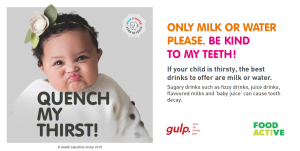
Sefton Council is working with Food Active to promote the new GULP (Give Up Loving Pop) Early Years campaign called ‘Kind to Teeth’.

 The campaign aims to improve knowledge and raise awareness of the health risks associated with consumption of sugary drinks in under-fives. 

 Developed by registered nutritionists, the campaign has been launched as part of National Smile Month and is the UK’s largest and longest running campaign to promote good oral health.  

 Research shows that by the age of five, nearly a third of children had obvious decay in their milk teeth.  In another study, 12% of three-year-olds were found to have evidence of tooth decay having on average three decayed, missing or filled teeth – and sugary drinks are a major part of the problem.

 This is despite the fact that babies are only recommended to consume breast milk (or formula milk if necessary) until six months and then milk and water are the best sources of hydration for babies and young children.

 Sugar is not necessary for the diet, especially for children and when consumed in the form of sugary drinks, can cause a whole host of health issues, from tooth decay to obesity and type 2 diabetes. Lots of sugar can often be hiding in many baby juices and other sugary drinks marketed at the early years.  

 The Kind to Teeth campaign has been developed by registered nutritionists, dental health and early year’s specialists and forms part of the well-known GULP campaign.  It is aimed at parents of children under five years of age, to help promote healthier drinking habits in the early years and will involve a number of electronic resources for local authorities to utilise.

 Cllr Ian Moncur, Sefton Council’s Cabinet Member for Health and Wellbeing, said: â€œImproving the health of Sefton’s young children is a key priority for us, so I am very pleased that the Kind to Teeth campaign is being promoted in Sefton. 

 “Nearly a quarter of our 5-year-olds start school with dental decay and a quarter in Reception year are overweight or are an unhealthy weight by the time they start school. Tackling unhealthy drink habits in the early years is a crucial preventative measure to protect our young children against poor dental health and weight gain”

 Matthew Ashton, Director of Public Health for Sefton and Knowsley, added: â€œWhen children are young, we have a fantastic opportunity to influence healthy food and drink patterns, as habits are often established when children are young.  

 “This campaign will help to educate parents on the health risks associated with consuming sugary drinks in the early years, and emphasise that water is the best source of hydration for their young one. We hope it will help to influence healthy drinking patterns from the early years and throughout their growth and development into adulthood.”

Search Box