Please follow & like us

Sefton residents can hop back on board the NHS COVID-19 vaccine bus

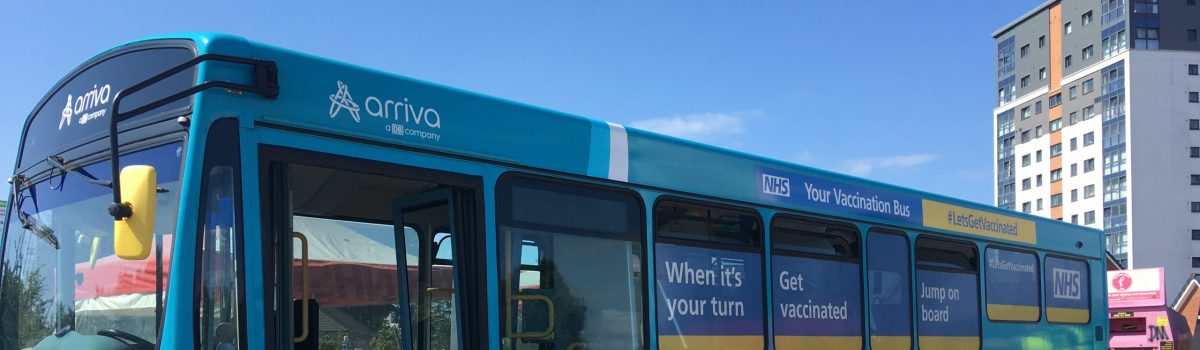
NHS COVID-19 vaccination bus parked in Bootle Asda car park

The NHS COVID-19 vaccination bus is returning to Asda in Bootle on Thursday 19 August after a successful first visit to the town.

Residents aged 18 and over will be able to visit the bus in the car park of Asda on Strand Road this Thursday 19 August from 10am-4pm for a first or second dose of the Pfizer vaccine, without the need for an appointment.

The bus will also be visiting Netherton Activity Centre on Friday 27 August, 10am-4pm, where residents aged 16 and above will be able to get their vaccine.

Successful visit

It follows the buses successful initial visit to Asda car park from 10-12 August last week, with more than 119 residents taking the opportunity to get their jab.

Earlier this week Margeret Jones, Sefton Council’s Director of Public Health said: “The best way to protect ourselves is to make sure we get both doses of the vaccine, which is now also available to 16 and 17-year-olds, who will soon be invited for their vaccination appointments.

Pete Chamberlain, local GP and chair at NHS South Sefton Clinical Commissioning Group (CCG), said: “It was great to see so many residents taking advantage of this easy way to come and get their jab. We saw people come along who had just popped to the shops, as well as those who had heard about the bus through their friends or the media and said they had found it useful to have such a convenient way to get the vaccine.

“We would encourage anyone who still needs to get their first or second vaccine to come along and take advantage of this quick and easy way to get protected. The vaccine protects yourself, your friends and your family, so whether you’re 80 or 18 it’s never too late to take up the offer.”

Seaforth Village Surgery

Seaforth Village Surgery re-opened for walk-in vaccinations on Tuesday 17 August to Saturday 21 August, from 10am-6:30pm after a week’s break, offering first and second doses of the Pfizer and AstraZeneca vaccines. This site will be offering jabs to those aged 16 and 17, as well as all over 18 year olds.

Following this week the dates and opening times of Seaforth Village Surgery and other locations will be posted on the CCG website every Monday: www.southseftonccg.nhs.uk

How to get your vaccine

The various ways you can get your COVID-19 vaccination in Sefton are:

For the latest information on vaccine eligibility, visit: https://www.nhs.uk/conditions/coronavirus-covid-19/coronavirus-vaccination/who-can-get-the-vaccine/.

Answers to frequently asked questions about the COVID-19 vaccines can be found here: https://www.southseftonccg.nhs.uk/coronavirus-information/covid-19-vaccination-faqs-sefton/.

Seaforth Village Surgery back open for walk-in COVID vaccinations & pre-booked jab appointments.

Seaforth Village Surgery is back open this week (Tuesday 17th  to Saturday 21st August to provide COVID-19 vaccinations for south Sefton residents aged 16 and over.

People can either walk in for their jab or book an appointment.

Re-opening

Run by GP practices in Seaforth and Litherland known as a primary care network, the vaccination site, is re-opening after a week’s break.

Seaforth is open for walk-ins from Tuesday to Saturday between 10am and 6.30pm. This site will be offering jabs to those aged 16 and 17, as well as all over 18 year olds. If people do want to book, they can call 07979 938 229 or book via their own GP practice if they are registered with a GP in south Sefton.

Following this week the dates and opening times of Seaforth Village Surgery and other locations will be posted on the CCG website every Monday: www.southseftonccg.nhs.uk

Vaccination bus

While the surgery was closed, the vaccination bus visited Asda in Bootle for three days and was a great success with 119 residents being vaccinated. On Thursday 19 August, the bus returns to Asda car park on Strand Road, 10am-4pm, offering residents aged 18 and above another way to get their COVID-19 jab.

The various other ways you can get your vaccination in Sefton are:

Walk-in

People who attend a walk-in clinic for their first dose will have their vaccination record updated online and will then be able to book in their second dose appointment using the national booking system.

Second jabs are also available at some of the walk-ins, if it has been at least eight weeks since the first dose and you can check which are offering both doses on the CCG website.

Getting the second dose is vital to getting longer lasting and maximum protection offered by the vaccines, with recent research also showing they are highly effective against the Delta strain of the virus.

Patients are reminded that although COVID restrictions ended in England on 19 July that when they are visiting healthcare facilities they must continue to wear a face covering and follow social distancing rules to protect themselves, other and vulnerable patients and staff.

Find out more from the Sefton Council website.


Parents & carers being advised to be aware of the signs of respiratory illnesses and when to get help

Graphic about Respiratory Syncytial Virus Local health experts locally are urging parents and carers to be aware of the signs of respiratory illnesses in children.

Numbers of cases are higher than usual for this time of year and expected to rise further over the winter months.

Common virus

Respiratory Syncytial Virus (RSV) is a common virus that causes coughs and colds in winter and is the most common cause of bronchiolitis in children aged under two.

In the UK, the RSV season usually begins in the autumn and runs throughout the winter. However, this year it is being seen in children much sooner.

Common symptoms of bronchiolitis are runny nose, a rasping, dry cough, mild increase in temperature. It may cause reduction in feed and more noticeable effort in breathing.

Struggles

Most cases of bronchiolitis pass within two to three weeks, but parents and carers should contact their GP or call NHS 111 if their child:

  • struggles to breathe;
  • has taken less than half their usual amount during the last two or three feeds;
  • has had a dry nappy for 12 hours or more;
  • has an ongoing high temperature of 37.8C or above.

Children aged under two months, those born prematurely and those with underlying health issues, such as a heart condition, are at higher risk of severe bronchiolitis. Their parents and carers should consider accessing health advice earlier.

999

Parents and carers are also advised to dial 999 for an ambulance if:

  • your baby is having difficulty breathing.
  • your baby’s tongue or lips are blue.
  • there are long pauses in your baby’s breathing.

Simple measures

Dr Shyam Mariguddi, clinical director for children’s medicine at Southport and Ormskirk Hospital NHS Trust, said that while respiratory infections are common in children, last winter saw fewer of them because of the COVID-19 restrictions.

He said: “We’re now seeing more new cases as restrictions have lifted and many new parents may not have experienced respiratory illness in their child until now. Understandably, this may be very concerning for them.

“For the majority of children, however, these illnesses will not be serious and the child can be cared for at home with simple measures such as paracetamol, rest and plenty of fluids.”

Concerned

Dr Kati Scholtz, clinical lead for respiratory conditions at NHS Southport and Formby CCG, said: “If your child has a sore throat, cough or cold and you are concerned about them, contact NHS 111 by phone or online in the first instance or your GP can advise if needed.”

“Most cases of bronchiolitis are not serious, but you should contact your GP or call NHS 111 if you’re worried about your child, they’re not feeding properly, they have a persistent high temperature of 37.8C or above, or they seem very tired or irritable.”

Reduce the spread

There are simple steps you can take to reduce the spread of all viruses:

  • Use tissues to catch coughs or sneezes, bin the used tissues as soon as possible and wash your hands with soap and warm water to kill the germs.
  • Children with flu or bronchiolitis symptoms should stay home and reduce contacts where possible.
  • Particularly avoid close contact with new-born babies, infants born prematurely (before 37 weeks), children under 2 born with heart or lung conditions, and those with weakened immune systems.

Find NHS advice about the symptoms of bronchiolitis and what to do. 

In this video Dr Shyam Mariguddi talks about bronchiolitis in children.

We need to carry on protecting ourselves says Sefton’s Health Chief as changes to self-isolation rules come in

Margaret Jones, Director of Public Health in Sefton
Margaret Jones, Sefton Council’s Director of Public Health

Margaret Jones, Sefton Council’s Director of Public Health is reminding people across the Borough of changes to the COVID-19 self-isolation rules that have come into effect.

From today (Monday 16th August), anyone who has been fully vaccinated no longer needs to self-isolate if they are identified as a close contact of a positive case. This means people who have had their second COVID vaccination dose at least 14 days ago and who are not showing any coronavirus symptoms.

Under 18s

Under 18s identified as a close contact of a positive case will not need to isolate either.

But, if they are identified as a close contact, they should still get a PCR test, unless they have had Covid-19 in the last 90 days, in which case they should get a rapid test instead.

Significant

Margaret Jones said: “This is a significant easing of the self-isolation rules, which means it’s important we all keep on making sure we protect ourselves, our families, our friends, our colleagues and the wider Sefton community.

“This means continuing to limit contact with people – particularly those who are clinically extremely vulnerable and where possible, wearing a face covering in enclosed spaces and where you cannot maintain social distancing.

“And we should continue taking free Lateral Flow Tests, which are available free from a wide range of local outlets including all Sefton pharmacies.

Both doses

Margaret continued: “The best way to protect ourselves is to make sure we get both doses of the vaccine, which is now also available to 16 and 17-year-olds, who will soon be invited for their vaccination appointments.

“Plus, it’s vital that anyone who starts to show COVID symptoms of a high temperature, a new persistent cough or a loss of taste or smell, should book a PCR test by calling 119 or visiting www.nhs.uk/coronavirus.

“People who test positive will still need to self-isolate no matter what their vaccination status or age.”

Employers

Mrs Jones also reminded employers across Sefton that they need to follow the general duties outlined in the The Health and Safety at Work etc Act 1974, and the Management of Health and Safety at Work Regulations 1999.

She said: “Many employers will already be carrying out risk assessments and putting suitable controls in place to maintain the safety and wellbeing of staff and the public and they need to continue doing this.  There is more information for business on our website at www.sefton.gov.uk/covid-and-business.

Links to further information about COVID testing, vaccination and self-isolating can be found at www.sefton.gov.uk/covid19

Government guidance can be found at www.gov.uk/guidance/covid-19-coronavirus-restrictions-what-you-can-and-cannot-do#keeping-yourself-and-others-safe

Free App launched to help with increased COVID related drinking

The ‘Lower My Drinking’ app has been launched for residents of Sefton and the wider Cheshire and Merseyside area. It is free to download for anyone who lives or works in the area.

The launch of the app is part of a new campaign from the NHS and local councils in Cheshire and Merseyside. The campaign aims to help local people to reduce drinking to the recommended limit of 14 units a week or less. This is of particular importance in the light of the COVID-19 pandemic which saw a rise in harmful drinking and its consequences on people, communities and services.

Research from Alcohol Change UK indicates that 1 in 5 people (21%) have been drinking more often during lockdown, with frequent and daily drinkers further increasing the amount they drink. This matters as habits are formed quickly but can be hard to break.

Alcohol’s effects on mental health are particularly concerning, as are those of tensions in household, especially for those with children. Even more worryingly, the 2020 Office for National Statistic (ONS) data showed the highest rate of alcohol deaths since records began.

Margaret Jones, Director of Public Health at Sefton Council, said: “The past 18 months have been incredibly challenging for all of us and statistics show that many people reported higher alcohol consumption during lockdown. We want people to be aware and mindful of their alcohol consumption so as not to impact negatively on their mental and physical health. The Lower My Drinking app allows people to see how much alcohol they consume and provides useful guidance. I would urge people in Sefton to download the app and take a positive step towards better health and wellbeing.”

Dr Paul Richardson, Deputy Divisional Medical Director at Liverpool University Hospitals NHS Foundation Trust, said: “Now is the perfect time to make changes to drinking habits as routines change with more people returning to work and people now being able to see family and friends. It is the time to get our health back on track and feel better about ourselves as life slowly returns to normality.”

Fiona Taylor, chief officer at NHS South Sefton Clinical Commissioning Group (CCG) and NHS Southport and Formby CCG, said: “Drinking too much alcohol can increase your risk of serious health conditions, affect your quality of life and impact on relationships. If you feel like you want to lower your drinking, by a little or a lot, then download the app and make a change today.”

The app is an effective tool that helps individuals to set and achieve a drinking reduction goal. It allows people to track progress, identify their motivation for reducing their drinking as well as highlighting issues that could potentially cause someone to drink more than is healthy for them and gives a set of proven skills that can be used to address these.

It also offers practical steps that you can add into your weekly routine to help lower your drinking such as:

  • regularly reviewing your drinking habits
  • comparing your drinking levels every week to see how you score
  • using motivational techniques to help you on your journey to healthier drinking
  • setting yourself alerts to help you on your way to staying on top of your drinking levels

Lorna Smythe, 46, from St Helens knew she was drinking too much at the start of the first lockdown. “I’m unsure if COVID caused me to drink more but it certainly didn’t help. There were a lot of things to worry about at home.”

Lower My Drinking positive story of mum who decreased alcohol consumption using free app

The mum of four has made changes to her drinking habits and says she can’t believe how good it feels. “I’m more positive and have been able to do more things.  I’ve even started Boxercise twice a week!  I’m getting fitter and I absolutely love it.  I’m in a much better place.” 

To download the app visit Google Play or App Store.


Search Box