
Please follow & like us

Free event to be held in Southport to show residents how to keep warm and well this winter

Sefton Council is hosting a Keep Warm, Keep Well event as part of its commitment to helping vulnerable people get through winter.

Image of someone staying warm next to a fire while holding a hot drinkThe Council’s Affordable Warmth team, in partnership with Sefton OPERA are holding the free event at The Atkinson Centre in Southport, Monday 31st October, from 10.30am to 3:30pm.

Information stands will be open between 10:30am and 12.30pm. Blood pressure checks, chair-based exercises, free goody bags and massages will also be on offer.

There will also be dance sessions taking place from 1.30pm onwards accompanied by live bands, music and entertainment.

Energy billsSefton Council recognises many households will struggle to pay their bills this winter due to the cost of living crisis. Autumn’s expected rise to £3,554 will leave average household bills 80 per cent higher going into the colder months when energy use soars. Many vulnerable people will be hit hard, including older people and those in ill-health, living in energy inefficient homes that are difficult and expensive to heat.

People can find out more information about the event by contacting Sefton Opera on 0151 330 0479 or 07452 867 648 admin@seftonopera.org.uk.

Anyone concerned about keeping warm at home should contact Sefton’s Affordable Warmth Team on 0151 934 2222.

People worried about paying gas and electricity bills or who are struggling due to rising prices in shops can find support and advice by visiting www.sefton.gov.uk/cost-of-living

Cllr Trish Hardy
Cllr Trish Hardy

Cllr Trish Hardy, Sefton Council’s Cabinet Member for Communities and Housing said: “With their gas and electricity bills set to rocket and inflation rising to the highest rate in 40 years, households and business across Sefton will be wondering just how they are going to get through the coming winter and beyond.

“While Sefton Council has no magic solutions and like councils across the UK is hit by the same rises in costs to run its operations and services, it is vital we recognise people’s plight and work with our partners to provide what support and advice we can.”

Margaret Jones our Director of Public Health reflects on the importance of vaccinations and the huge benefits they have provided.

As the world marks World Polio Day, which falls a few days from the birthdate of Jonas Salk, who developed the first polio vaccine, Margaret Jones our Director of Public Health reflects on the importance of vaccinations and the huge benefits they have provided.

Margaret Jones, Sefton Council's Director of Public Health
Margaret Jones, Sefton Council’s Director of Public Health

As Sefton Council’s Director of Health, I am reminded daily just how lucky we are to live in a world where vaccinations prevent so much suffering and misery from serious illnesses that affected people in living memory.

Measles, mumps, rubella, polio, diphtheria, tetanus, whooping cough and hepatitis are just some of the vaccinations now provided routinely to young people through the NHS. So successfully, in fact, that many younger people are unlikely to have heard of some of them.

Suffering and misery

However, as someone who has worked in the NHS and local council, I know all about these diseases and the suffering and misery they can cause and did cause before people were protected from them.

More recently, we have seen the introduction of annual jabs to prevent people from catching ‘flu, a virus that can make us feel very ill and which for some, can have even worse effects.

As a result, most of us, while we have the occasional bad cold, thankfully won’t have suffered from actual flu. And those of us who have, will certainly remember the fever, aches pains and fatigue that goes with it.    

And of course, the past two and a half years of my life, like everyone else’s, have been dominated by COVID-19, a virus that seemed to come out of nowhere, but which became a global pandemic in no time.

Liberated by vaccines

When I look back to those early days of COVID, when the country was in lockdown and the frequent sirens of ambulances were all that seemed to break the enveloping silence, when hospitals were full of seriously ill people, many of them on ventilators and in induced comas, when we couldn’t be with our friends and neighbours even at times of celebration or grief, I can only be thankful that we were eventually liberated from that situation – by vaccines.

It was vaccines, developed by scientists and manufactured in record times and rolled out to so many quickly by the NHS, which gave and are still giving us the protection from COVID.

It was vaccines that have enabled most of us to get back to lives that are relatively normal, although I think forever changed.    

It is vaccines that mean for most of us, catching COVID makes us a bit unwell but no longer puts us at risk of hospitalisation, although there are some concerns about the long-term effects of contracting the virus for some.

Ongoing roll outs

And it will be vaccines, in ongoing roll outs and top-up doses, that will continue to protect us from COVID, which look likely to stick around, in the same way that is already happening so successfully with flu and those nasty childhood illnesses that we rarely see any more.

So I thank Jonas Salk and the developers of all the other viruses from which we’re protected today. And all those other scientists who are working right now, to find new preventions and cures that can improve all our lives.

And I will also be pressing on with my work as the Council’s Director of Public Health, which means encouraging everyone who lives and works in Sefton or who visits the Borough to ensure they are fully vaccinated, against flu and COVID 19. 

You can book COVID vaccinations and boosters here.

You can find out more about flu vaccinations here.

New interpreter service launched for deaf patients

Signalise logoThe NHS in Sefton, Knowsley and Liverpool have been working together to improve interpreter services for D/deaf patients.

More responsive services

After engagement with patients highlighted the need for more responsive interpreter services, in September 2021 a new contract was awarded to Signalise Co-op to provide sign language and deafblind services to the local NHS, including GP practices, hospitals and community health services.

Following the initial success of this service, a further enhancement has been developed and will be available in all local GP practices from Monday 10 October 2022. This will allow sign language users to make calls to their GP surgery directly by phone.

Patients will do this by using the Signalise Video Relay Service (VRS) to contact a Signalise interpreter, who will then telephone their GP practice, community or hospital team and interpret the call on their behalf.

Huge step forwards

Dr Monica Khuraijam, a GP from Liverpool explains: “Previously, if a patient who was deaf wanted to get a GP appointment, they either had to go to the surgery in person to request this or rely on a family member or friend to call their surgery for them – so this is a huge step forwards in empowering deaf patients to be able manage their own medical needs.”

The system will significantly improve access to healthcare services for D/deaf patients by making it easier for them to contact the NHS for advice or treatment, and also ensure that an interpreter is arranged for each of their health appointments.

Patients will also be able to request sign language versions of patient letters and other medical information under the new service.

Appointments

 D/deaf patients can start using the service to contact their GP practice or book appointments now by either:

They can also find a patient video explaining more about how to use the service to here: http://beta.signalise.coop/video-info

Video Relay

In addition to this, there are also plans to extend the new Video Relay Service for BSL users into local hospitals and other key health services very soon.

Signalise Co-op is co-owned and co-run by both members of the local Deaf community and BSL/English interpreters, and any profit made is reinvested into the co-op and its community.

 You can find out more about Signalise’s services here. 

Be kind to your mind this World Mental Health Day

There are small things we can all do to help be kind to our mind and these can make a big difference to how we feel.

Every Mind MattersThat’s why a new Better Health – Every Mind Matters campaign is being launched, helping us find those little things we can all do to look after our mental health and showing us how they can add up to make a big difference; helping us to lead happier, healthier lives and cope with life’s challenges.
At its heart is the free, NHS-approved Mind Plan, available on the website. By answering five short questions people get a personalised mental health action plan, providing practical tips to help them deal with stress and anxiety, boost their mood, sleep better and feel more in control.

Margaret Jones, Sefton Council’s Director of Public Health said: “While it’s important to remember mental health issues need to be addressed all year around, events like World Mental Health Day do raise awareness and further allows conversations around such issues to be normalised. Mental health is of the upmost importance, and it is key that residents take steps to look after their mental wellbeing and seek help if they need it.”

Search Every Mind Matters for free ways to be kind to your mind.

Sefton residents urged to keep doing the Simple Things this winter to stay healthy

Sefton residents and businesses are being reminded of the ‘Simple Things’ they can do to help reduce the spread of infectious diseases over the winter period so they can keep themselves and others safe.

Simple Things is a brand new campaign that has been developed by the Cheshire and Merseyside Champs Public Health Collaborative.

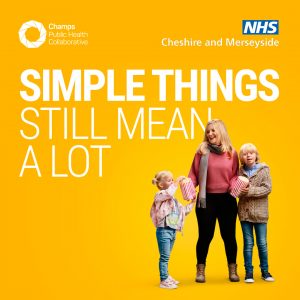
Simple things still mean a lotThe ‘Simple Things’ campaign’s central message is that by carrying out simple actions, like washing hands, sanitising surfaces, covering faces when coughing or sneezing, and staying at home when unwell, will help reduce the spread of infectious diseases.
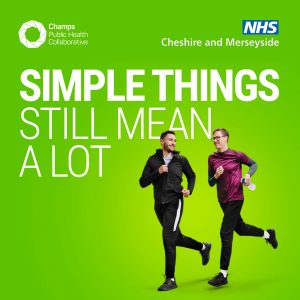
This will mean less illness over the winter period.

Margaret Jones, Sefton Council’s Director of Public Health said: “Simple Things encourages people to keep on carrying out regular tasks or to adopt small changes to their lifestyle that will help them stay healthy.

“I encourage Sefton residents to follow the ‘Simple Things’ campaign advice.”

Although the infectious disease most talked about has been COVID-19, the campaign and these simple measures also apply to other diseases like flu, common colds and measles.

When developing Simple Things, the Collaborative took an insight-led approach to ensure the campaign was communicating the most appropriate messages in the most relevant way.

Simple things still mean a lotThe insight found that the target audiences have a high understanding of the mitigating behaviours to minimise the spread of infectious diseases, but they would appreciate constructive reminders delivered in a thoughtful, positive way.

The insight also found that across all age groups, younger people are most concerned about new outbreaks of illnesses such as COVID-19 and flu. 29 per cent of 16 to 34 year olds surveyed said they are ‘very concerned’, compared with only 18 per cent of over 65s.

Those from an ethnic minority background were also found to be ‘very concerned’ about future outbreaks, with around a third (33 per cent) highlighting their feelings. Just 23 per cent of those white British people surveyed felt the same.

Overall, more than two thirds of people living across the region are worried about the spread of infectious diseases this winter.

The study, which was conducted among more than 1,000 people living across the region, also revealed how people were most likely to trust health advice from local clinicians.

Dr Paul Fitzsimmons, Medical Director at Warrington and Halton NHS Foundation Trust, said: “It’s surprising that those who are statistically less likely to get seriously ill from COVID-19 and other winter illnesses are most concerned about outbreaks. We know that disruption to education and social lives, plus the negative mental health impacts of lockdown, have clearly left a lasting mark on our younger generations who are now fearful of what could happen again.

“As we approach winter – and the annual spike in cases of flu, measles and COVID-19 – this highlights the need for all of us to take the steps that can help to reduce the spread.

“For the last two winters, we have all been on high alert for COVID and how we stay safe – in fact, we have seen a reduction in the number of cases of other respiratory illnesses, largely due to our improved health habits. As such, it’s essential that we maintain this level of awareness and continue to practice good hygiene as much as possible.

“We all know that these small preventative measures can make a big difference – we’re encouraging everyone to keep doing these simple things to play their part and help reduce the spread of winter illnesses.”

To learn more about Simple Things, please visit www.simplethings-nhs.com

Search Box